Swallow nest peptide 500 micrograms is the amount of raw material added per bottle, not the sialic acid content, and it does not mean drinking it will have any effect. Likewise, red ginseng extract 200 mg and blood protein peptide 10 mg—these numbers all come from supplier product information. They belong to the ingredient list level of information and are a different matter from finished-product testing data.
This article helps you break down a few places on the label that are easy to confuse: what exactly swallow nest peptide 500 micrograms is saying, how three iron sources appear in the ingredient list, and what you should confirm on the recipient's behalf before giving it as a gift.
Swallow nest peptide 500 micrograms: first distinguish raw material from finished product
The ingredient list says swallow nest peptide (500 μg/bottle), meaning 500 micrograms of swallow nest peptide raw material are added per bottle. μg is microgram, and 1,000 micrograms equals 1 milligram. This number describes the amount put into the formula, not how much sialic acid you can drink per bottle, nor absorption rate or efficacy data.
The same logic applies to other ingredients: red date extract 6,000 mg/bottle, red ginseng extract 200 mg/bottle, codonopsis powder 150 mg/bottle, and pyrroloquinoline quinone disodium salt 2 mg/bottle are all raw material addition amounts from supplier information. These numbers can help you understand the ingredient composition, but they cannot be used to infer what will happen after drinking it.
If you are comparing different products, first look at the raw material addition amount per bottle, then look at the nutrition facts table on the actual retail label. The two are in different places and serve different purposes.
Three iron sources appearing at the same time: how to read it
At the end of the ingredient list are heme iron, ferrous glycinate, and sodium iron ethylenediaminetetraacetate. All three are nutritional iron fortification sources, but their forms differ: heme iron comes from animal-derived materials, while ferrous glycinate and sodium iron ethylenediaminetetraacetate belong to other iron forms. Their appearance in the ingredient list does not equal the iron content per bottle; for specific values, look at the nutrition facts table.
One thing to note is that this product contains animal-derived ingredients and is not vegetarian. People with fish allergies should not consume it, because the ingredients include salmon hydrolyzed protein peptide. If you are not sure whether the recipient has a fish allergy, asking before giving the gift is easier than explaining afterward.
For more on how to think about choosing iron sources, you can read Swallow Nest Peptide 500 Micrograms and Three Iron Sources: Understand These Two Label Details Before Buying, which explains the order for reading labels in more detail.
Four things to confirm on the recipient's behalf before giving it as a gift
First, whether the recipient belongs to a group unsuitable for it. Infants and young children, pregnant women, breastfeeding women, children under 14, and people with fish allergies should not consume it. This is not a suggestion; it is clearly stated in the product information. If the recipient is trying to conceive or is breastfeeding, do not make the judgment for them about whether they can drink it. Ask them to consult a medical professional first.
Second, whether the recipient is taking medication or has special dietary needs. The product information states that if you are taking medication or have special dietary needs, please ask a medical professional before purchasing. Passing this sentence along clearly when giving the gift is more useful than just saying, "This is good."
Third, check the actual packaging for the daily serving. The product information suggests drinking it after meals, but how much to drink each day should follow the actual sales packaging label and is not uniformly fixed. Seven bottles per box and 50 mL per bottle are specification information, not a requirement to finish one bottle every day.
Fourth, whether the storage conditions can be met. It needs to be placed in a cool, dry place and kept away from direct sunlight. The shelf life is 18 months, and the expiration date is on the bottle. If the recipient's home is relatively humid or they tend to put drinks by the window, remind them.
It is not a sugar-free drink; this should be said in advance
The ingredients contain red date extract, concentrated goji berry juice, concentrated red pomegranate juice, and other concentrated fruit juices, as well as the sweetener sucralose. Sucralose is a sugar substitute, but the product does not claim to be sugar-free. For sugar content and other nutritional values, please refer to the actual nutrition label.
If the recipient is controlling sugar intake, explain this clearly before giving the gift and let them decide for themselves. This is more appropriate than having them discover only after receiving it that the ingredient list contains a sweetener.
How to drink it and how to choose
Shake well before drinking and drink immediately after opening. The product information suggests drinking it after meals. Just treat it as one choice in your daily diet; there is no need to attach extra expectations to it.
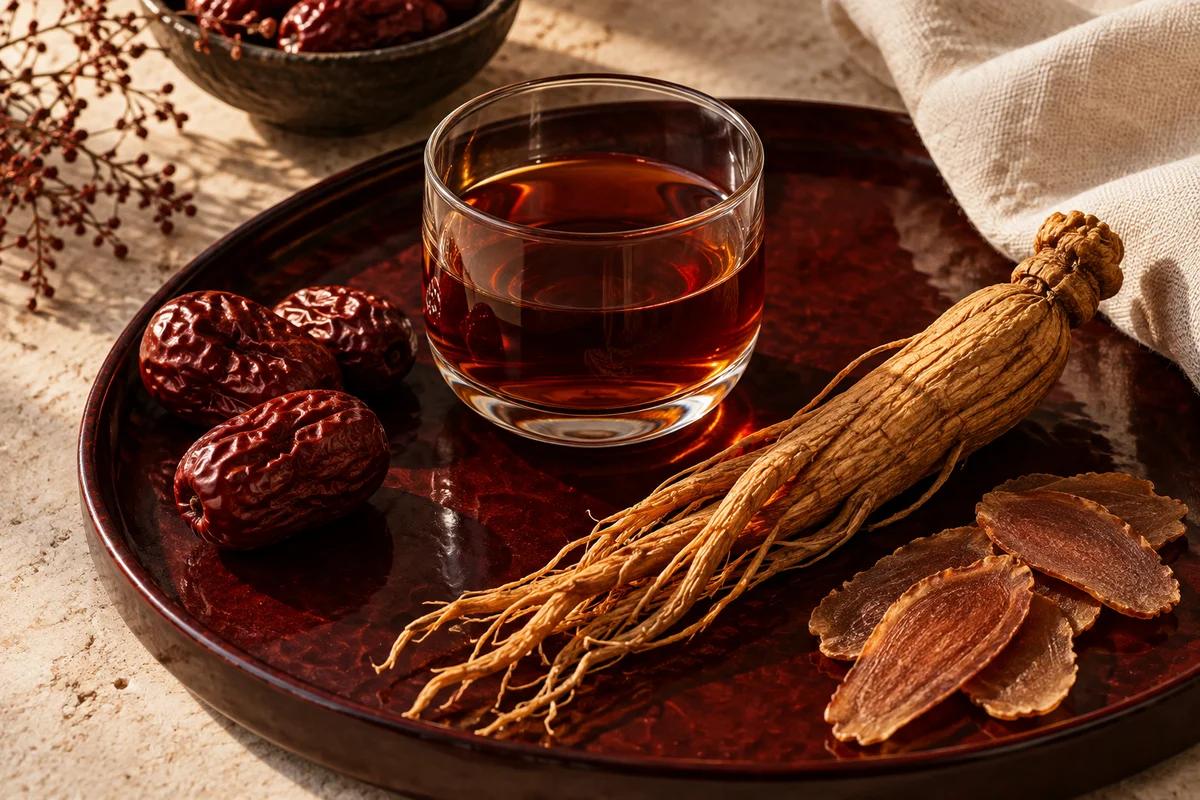
This Red Ginseng Ejiao Peptide Daily Nourishing Drink is a ready-to-drink food containing red dates, red ginseng, and various peptides. Each box has 7 bottles, 50 mL per bottle. It is food, not medicine, and cannot replace a balanced diet. There is no promise of improvement effects or number of days to see results after drinking.
If you or the recipient feel persistently tired, unwell, or suspect iron deficiency, seek professional evaluation first rather than relying on a drink to solve it. Giving a gift is about thoughtfulness; explaining the applicable boundaries clearly is what truly considers the other person.