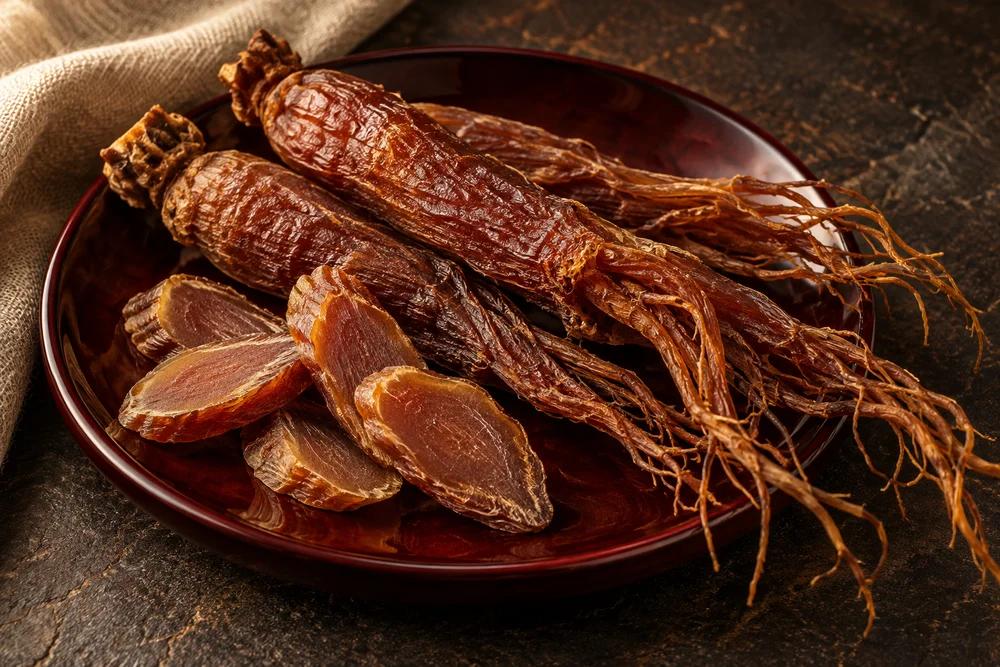
Turning to the ingredient list, seeing red ginseng extract and ginseng powder appear at the same time, many people wonder: aren't these two redundant? In fact, they are two different ingredient forms, each with its own processing path. Red ginseng extract is a paste obtained after red ginseng is steamed and concentrated; supplier information shows 200 mg is added per bottle. Ginseng powder, on the other hand, is made by drying ginseng and grinding it directly into powder, belonging to the solid beverage form. Their simultaneous appearance is an ingredient combination in formula design, not simple stacking.
Extract and Powder: Different Forms, Different Uses
Ingredient form directly affects how it performs in a ready-to-drink product. Extracts usually undergo water extraction and concentration, making them easier to mix evenly with liquids; powders, however, require consideration of solubility and sedimentation issues. This is also why the product recommends "shake well before drinking" — powder-type ingredients may settle after standing.
From the perspective of label reading, the ingredient list is arranged from most to least by added amount. Red date extract at 6,000 mg per bottle ranks first, followed by red ginseng extract 200 mg, codonopsis powder 150 mg, blood protein peptide 10 mg, pyrroloquinoline quinone disodium salt 2 mg, and bird's nest peptide 500 μg in order. These values are ingredient addition amounts, not active component contents, nor do they represent potency. To further distinguish the difference between the ingredient list and the nutrition label, you can refer to the article Ingredient List Differences.
Three Iron Sources, Why More Than One
Three iron sources appear in the ingredient list: heme iron, ferrous glycinate, and sodium iron EDTA. They are respectively animal-derived iron, amino acid chelated iron, and EDTA iron sodium — different forms with different roles in the formula. It should be made clear that the added amounts of these iron sources do not equal the iron content per serving; for specific values, refer to the nutrition label. Regarding the differences among the three iron sources, Three Iron Sources provides a more detailed summary.
Peptide Ingredients: Long Names, But the Logic Isn't Complicated
Sea cucumber peptide, ejiao peptide, salmon hydrolyzed protein peptide, blood protein peptide, fish maw oligopeptide, black-bone chicken peptide, bird's nest peptide… These "peptides" are essentially small molecular fragments produced after proteins are broken down. Cutting large protein molecules into small fragments is usually done to make them more stable and easier to disperse in liquids. They are food ingredients, not pharmaceutical components.
Confirm Three Things Before Purchasing
First, check the suitable population. Product information clearly states: not suitable for infants and young children, pregnant women, nursing mothers, children under 14, and people allergic to fish. Contains animal-derived ingredients; not vegetarian. If you are taking medication or have special dietary needs, consult a medical professional before purchasing.
Second, check sugar and sweeteners. The ingredients contain red date extract, concentrated fruit juice, and sucralose — it is not a sugar-free product. Sugar content and other nutritional values are subject to the actual nutrition label.
Third, check the daily serving. Product information recommends drinking after meals; for the daily serving, please follow the actual sales packaging label and do not increase the amount on your own. Each box contains 7 bottles, each bottle 50 mL, ready to drink after opening, store in a cool and dry place, avoid direct sunlight, shelf life 18 months, check the bottle for the expiration date.
What Scenarios It Suits
As a ready-to-drink food containing red dates, red ginseng, and multiple peptides, Red Ginseng Ejiao Peptide · Daily Nourishing Drink is positioned as an option in the daily diet. In a 50 mL small bottle, shake well after meals and drink after opening — suitable for keeping at the office or at home as a reminder of a fixed habit. But it is not a medicine, cannot replace a balanced diet, and makes no promise of improvement effects or time to see results after drinking.
If you experience persistent fatigue, discomfort, or suspect iron deficiency, you should first seek professional evaluation rather than relying on a food product to solve the problem. Turning self-care into a small habit in life, starting from understanding the ingredient list, is more practical than pursuing "instant results."