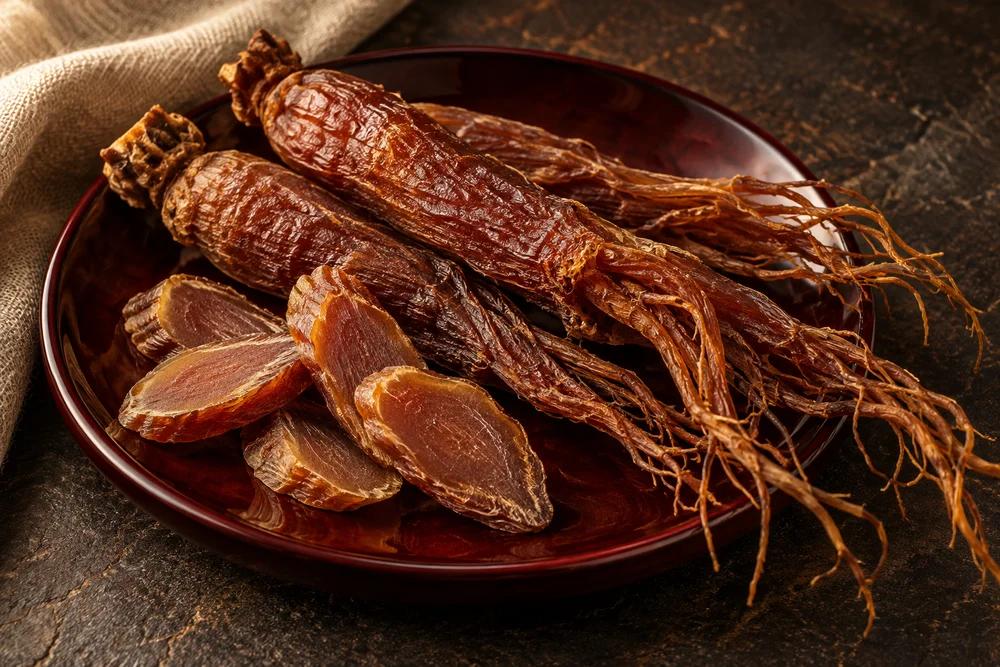
When you pick up a bottle of iron-rich red ginseng ejiao peptide blood protein polypeptide drink and turn to the ingredient list, you will notice that red ginseng appears twice: once as red ginseng extract and once as ginseng powder. This is not duplicate labeling, but two different forms of raw material. In CIZHUANG drinks, red ginseng extract and ginseng powder as ingredient forms essentially mean that the same type of plant raw material is added in two forms—extract and powder—and listed separately on the label, so they need to be understood separately when reading.
What is the difference between extract and powder?
Red ginseng extract is a paste obtained by extracting red ginseng with water and then concentrating it. The ingredient list writes "red ginseng extract [ginseng (artificially cultivated for 5 years or less), water]," and the product information states 200 mg per bottle. Ginseng powder is a powder obtained by drying and pulverizing ginseng. In this product it is labeled as "ginseng (artificially cultivated for 5 years or less) powder (solid beverage)," and the information does not give a specific added amount.
Both are ginseng-derived, but their forms differ: the extract has undergone water extraction and concentration, while the powder is physically pulverized. The label lists them side by side to truthfully reflect the types of materials used, not to say that each has a different function. It should be noted that 200 mg per bottle is the raw material added amount of red ginseng extract, not the ginsenoside content, nor efficacy data.
Why would one drink contain two forms?
Judging from the ingredient list, this product also contains red date extract, various peptides, American ginseng powder, codonopsis powder, and others, reflecting a compound ingredient design. The simultaneous appearance of red ginseng extract and ginseng powder may be a choice in formula design, but the supplier information does not explain the specific reason, and we do not speculate. What readers can confirm is: both are labeled raw materials; the added amount information is clear for the extract, while the powder amount is not labeled.
If you are comparing different products, do not simply add "200 mg red ginseng extract" and "ginseng powder" together as the total ginseng amount, because the two forms differ and the measurement basis may not be consistent. A more reliable approach is to look at the overall ingredient list rather than fixating on a single number.
3 checking steps for reading the label
Step 1: Look for keywords about "raw material form." Words such as "extract," "powder," "extract liquid," and "concentrate" in the ingredient list indicate that the raw materials have undergone different processing. When red ginseng extract and ginseng powder are listed side by side, first confirm their respective labeling positions and added amounts.
Step 2: Distinguish added amount from component content. The 6000 mg red date extract, 200 mg red ginseng extract, and 10 mg blood protein polypeptide in the product information are all raw material added amounts, not active ingredients or nutritional iron content. If the label has a nutrition facts table, values such as iron and sugar should be based on that table.
Step 3: Check the unsuitable populations and drinking recommendations. This product is not suitable for infants and young children, pregnant women, breastfeeding women, children under 14 years old, or people allergic to fish; it contains animal-derived ingredients and is not vegetarian. Shake well before drinking and drink immediately after opening. The product information recommends drinking after meals, and the daily portion should follow the actual sales package labeling.
Sweetness and sugar: do not be misled by "red ginseng"
This drink contains red date extract, concentrated fruit juice, and sucralose sweetener, so it is not a sugar-free product. Please refer to the actual nutrition label for sugar content and other nutritional values. For more label questions about sweeteners and red ginseng forms, see Sweeteners and Red Ginseng Forms and Red Ginseng Extract and Red Ginseng Powder.
Put it into daily life, not treat it as a task
Letting self-care become a small habit in life can start with a 50 mL ready-to-drink beverage, but there is no need to place expectations on it beyond those for food. It is a ready-to-drink food containing red dates, red ginseng, and various peptides, not a medicine, and it cannot replace a balanced diet. The product does not promise improvement effects or a number of days to take effect after drinking. If you continue to feel tired, unwell, or suspect iron deficiency, you should first seek professional evaluation.
For storage, place it in a cool, dry place and avoid direct sunlight; the shelf life is 18 months, and please see the bottle for the expiration date. When purchasing, if you are taking medication or have special dietary needs, ask a medical professional first. To learn about the complete ingredients and specifications, see the product page for Red Ginseng Ejiao Peptide Daily Nourishing Drink.
Reading the label clearly is more useful than memorizing a number. The simultaneous appearance of red ginseng extract and ginseng powder reflects different ingredient forms, not a stacking of effects; 200 mg per bottle is the raw material added amount, not the component content. The next time you pick up the bottle, first look at the ingredient list, then the nutrition label, and finally check the unsuitable populations. After these three steps, you can make your own judgment.