When you pick up a bottle of CIZHUANG beverage and turn to the ingredient list, two questions may come to mind: it clearly tastes sweet, so why can't it be called sugar-free? Why do red ginseng extract and red ginseng powder appear at the same time? Both questions point to the basics of label reading—the ingredient list states "what is added," not "what effects it has."
Sweeteners Are Not the Same as Sugar-Free; the Key Is Sugar Content
Let's answer the first question: why can't a CIZHUANG beverage with sweeteners be considered a sugar-free drink? Because "sugar-free" has a clear labeling threshold, and sweeteners only address "whether it tastes sweet," not "how much sugar it contains."
The ingredients of this beverage include red date extract, concentrated goji berry juice, and concentrated red pomegranate juice—these raw materials naturally contain sugar. Sucralose is also added as a sweetener. Sucralose provides sweetness, but its presence cannot offset the sugar contributed by other ingredients. The product information clearly states: the ingredients include red date extract, concentrated fruit juice, and sucralose sweetener, and no sugar-free claim is made. For sugar content and other nutritional values, please refer to the actual nutrition label.
In other words, sweeteners and sugar are two separate matters. A sugar-free claim requires checking whether the sugar content on the nutrition label meets the standard, not whether sweeteners are present. If you are managing your sugar intake, the right move is to turn to the back and check the nutrition facts panel, not just focus on "whether it tastes sweet." For more on distinguishing sweeteners from sugar, see Sweetener Questions.
Red Ginseng Extract and Red Ginseng Powder: Two Forms, One Approach
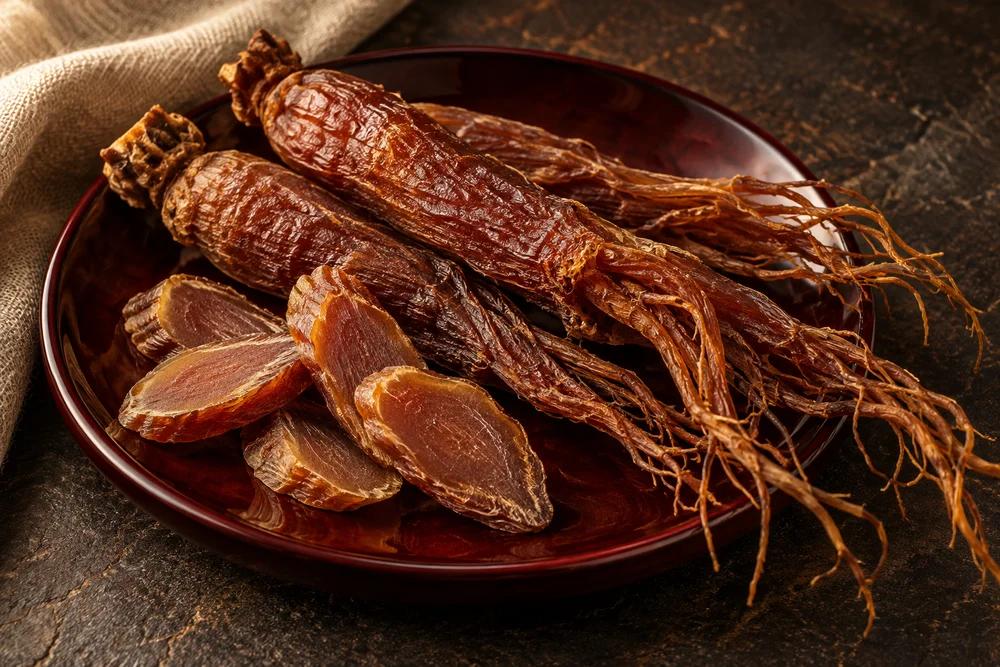
Second question: why do red ginseng extract and red ginseng powder appear in the same bottle? This concerns ingredient forms, not a stacking of effects.
According to product information, the ingredients of red ginseng extract are ginseng (artificially cultivated for 5 years or less) and water, with an added amount of 200mg per bottle; ginseng powder (solid beverage) also appears in the ingredient list. Both are different forms of red ginseng-related raw materials: extract is a liquid form obtained through extraction and concentration, while powder is a solid beverage form. Their simultaneous presence is a formulation design choice and does not mean one form is more "effective."
It should be clear that the values listed in the information are raw material added amounts, not active ingredient contents, nor efficacy data. The 200mg per bottle of red ginseng extract is an added amount and cannot be used to infer ginsenoside content, let alone the effects after drinking. Similarly, values such as 150mg per bottle of codonopsis powder, 500μg per bottle of bird's nest peptide, and 10mg per bottle of blood protein polypeptide should all be understood as raw material added amounts. For a breakdown of the three iron sources and ingredient forms, see Iron Source Interpretation.
Scenario Comparison: When It Fits
| Scenario | Suitable | Notes |
|---|---|---|
| Diverse daily diet, looking for a ready-to-drink food | Can consider | 7 bottles per box, 50mL per bottle, ready to drink after opening, convenient after meals |
| Strict sugar control, requiring sugar-free drinks | Not recommended | Contains red date extract, concentrated fruit juice, and sucralose; not sugar-free |
| Vegetarians | Not suitable | Contains animal-derived ingredients; not vegetarian |
| Infants, pregnant women, nursing mothers, children under 14, people with fish allergies | Not suitable | Product information clearly lists unsuitable populations |
| Currently taking medication or with special dietary needs | Consult a healthcare professional first | Should ask a professional before purchasing |
Regarding price tier, the information does not provide price or stock details, so a cost-effectiveness judgment cannot be made. What can be confirmed: this is a food, not a medicine, cannot replace a balanced diet, and makes no promise of improvement effects or time to results after drinking.
Drinking and Storage: Two Actions to Get Right
Shake well before drinking; ready to drink after opening. Product information suggests drinking after meals; for daily serving size, follow the actual sales packaging label and do not increase the amount on your own. For storage, keep in a cool, dry place away from direct sunlight; shelf life is 18 months—check the bottle for the expiration date.
If you experience persistent fatigue, discomfort, or suspect iron deficiency, seek professional evaluation first rather than relying on a beverage to solve the problem. Treat Red Ginseng Ejiao Peptide Daily Nourishing Drink as one of your daily dietary choices, provided it fits your dietary restrictions and scenarios.
Back to the beginning: sweeteners are not a pass for sugar-free claims, and red ginseng extract and red ginseng powder in the same bottle are not proof of efficacy. Understanding the ingredient list is more useful than memorizing selling points.