Two Ingredient Formats That Look Different on the Label
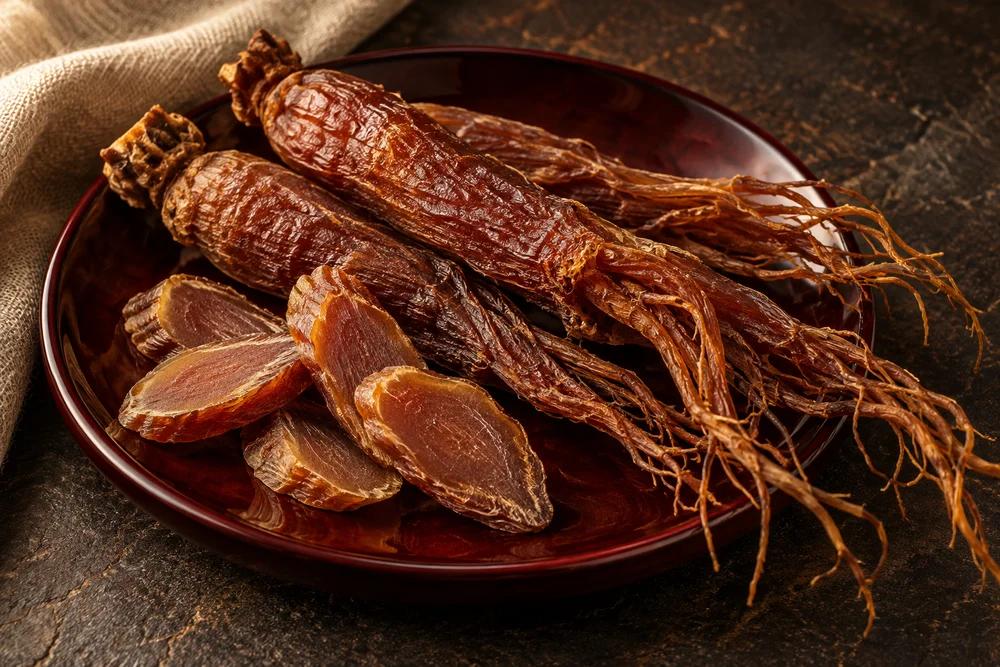
Pick up a bottle of iron-rich red ginseng ejiao peptide blood protein polypeptide drink and flip to the ingredient list. You will see "red ginseng extract" and "ginseng powder (solid beverage)" listed at the same time. The former has a parenthetical note stating ginseng (artificially cultivated for 5 years or less) and water, with an added amount of 200 mg per bottle; the latter has no separately stated added amount.
This is not a question of which one is greater or lesser, but of different ingredient formats. Extract is a form that has undergone extraction and concentration; powder is a dried, milled, or solid beverage form. The supplier materials provide the per-bottle added amount for red ginseng extract, but do not provide a corresponding value for ginseng powder, nor do they explain what each contributes in the finished product. This is something to note when purchasing: stating an added amount does not equal stating the active ingredient content, let alone efficacy data.
What Other "Powders" and "Peptides" Are in the Ingredient List
In addition to red ginseng extract and ginseng powder, this drink's ingredients also include a series of items appearing in "powder (solid beverage)" form: American ginseng powder, codonopsis powder (150 mg per bottle), lingzhi powder, poria powder, astragalus powder, lily powder, and longan powder. There are also various peptide ingredients such as sea cucumber peptide, ejiao peptide, salmon hydrolyzed protein peptide, blood protein polypeptide (10 mg per bottle), fish maw oligopeptide, black-bone chicken peptide, and bird's nest peptide (500 μg per bottle).
Peptides are small molecular fragments produced by protein hydrolysis, and here they are used as food ingredients. The values given in the materials are all raw material added amounts, not doses of purified functional components. For example, blood protein polypeptide at 10 mg per bottle and bird's nest peptide at 500 μg per bottle only indicate how much raw material was added to the formula; they cannot be used to infer what the body will receive after drinking.
In addition, the ingredients contain three iron sources: heme iron, ferrous glycinate, and sodium ferrous ethylenediaminetetraacetate, as well as nicotinamide and pyrroloquinoline quinone disodium salt (2 mg per bottle). These are likewise food ingredients, not pharmaceutical ingredients. Research on components cannot replace evidence on the finished product, and this product does not promise improvement effects or a number of days to see results after drinking.
Who Should Not Use It, and Who Should Ask First
The materials clearly list the unsuitable groups: infants and young children, pregnant women, breastfeeding women, children under 14 years old, and people allergic to fish. It contains animal-derived ingredients and is not vegetarian. If you are taking medication or have special dietary needs, ask a medical professional before purchasing.
This is not boilerplate. For example, people allergic to fish need to avoid it because the formula contains aquatic-derived ingredients such as salmon hydrolyzed protein peptide. Pregnant and breastfeeding women and children are outside the applicable scope, and the brand materials do not provide a basis for this group to drink it, so no recommendation is made.
How to Drink It Daily and How to Store It
The product materials recommend drinking it after meals, shaking well before drinking, and drinking immediately after opening. For the daily amount, please follow the actual retail package labeling and do not increase the amount on your own. Each box contains 7 bottles, and each bottle is 50 mL. It is a ready-to-drink food, not a medicine, and cannot replace a balanced diet.
For storage, place it in a cool, dry place and avoid direct sunlight. The shelf life is 18 months; check the bottle for the specific expiration date. Drink it as soon as possible after opening and do not leave it until the next meal.
If you treat it as one choice in your daily diet, products such as red ginseng ejiao peptide can be placed in a fixed spot after meals to form a habit. But if you are persistently tired, unwell, or suspect iron deficiency, you should first seek professional evaluation rather than relying on a bottle of drink to solve it.
Three Reminders for Reading the Label
First, the ingredients contain red date extract, concentrated fruit juice, and sucralose sweetener, so this is not a sugar-free claim. Sugar content and other nutritional values are subject to the actual nutrition label.
Second, raw material added amounts are not active ingredient or nutritional iron content. When you see "6000 mg per bottle" or "200 mg per bottle," it is enough to understand it as the formula input amount.
Third, the ingredients and added amounts are compiled from supplier materials, and the actual retail label prevails. Different batches or versions may differ, so flip to the back and check once before buying.
Turn taking care of yourself into a small habit, starting with understanding an ingredient list. Knowing clearly what you are drinking, what does not suit you, and how much to drink each day is more useful than memorizing a string of numbers.